The main time to refresh mulch beds in Central Kentucky is mid-spring, after cleanup and once the soil has started to warm. Fall is a second window, after the leaves are out. Hardwood gives a natural brown look, dyed holds a stronger color longer, and natural mulch fades to gray. Aim for about 2 to 3 inches of total depth, not a new thick layer every year.
Lawn Busterz offers mulching with fresh hardwood, dyed, or natural mulch, with beds prepped, edged, and laid right. This guide explains the difference between the three materials, when to refresh, how to judge depth, and what to do when water keeps washing mulch out of a bed.
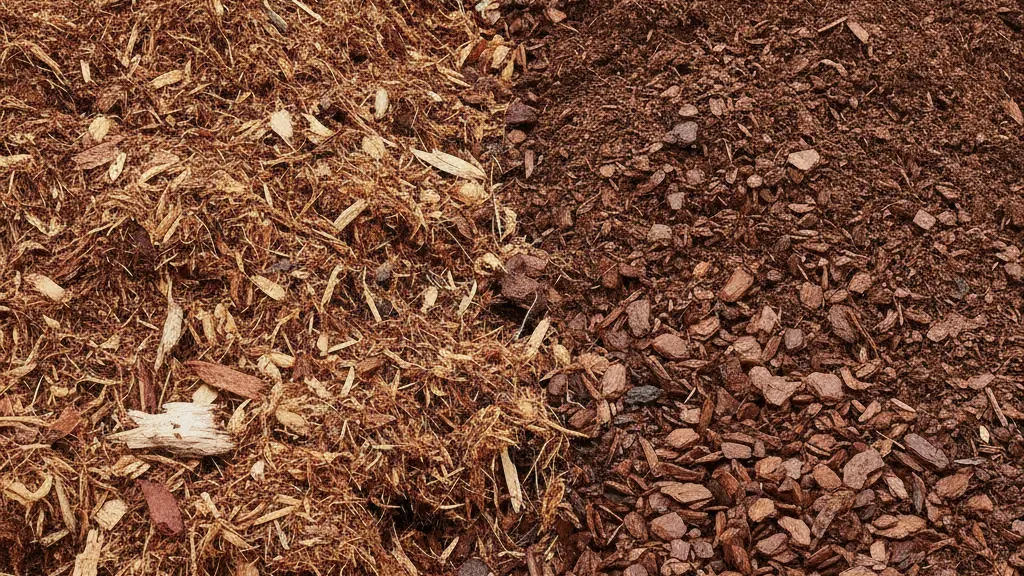
Hardwood, dyed, and natural mulch compared
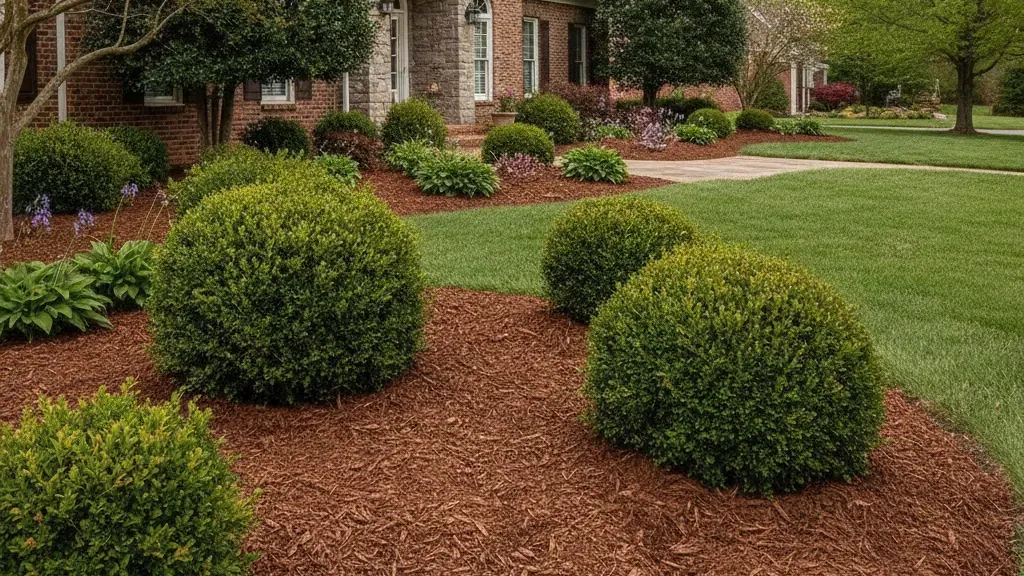
Hardwood mulch is shredded bark and wood from hardwood trees. It has a medium brown color, knits together well, and stays in place on mild slopes. It breaks down at a moderate pace and adds organic matter to the soil as it does.
Dyed mulch is wood mulch colored with a dye, commonly black, brown, or red. Its main advantage is color: it looks fresh and uniform and holds its shade longer than undyed mulch. It is a popular choice for front beds and curb appeal. Ask what wood the dyed product is made from, since quality varies.
Natural mulch is undyed wood or bark mulch. It starts brown or tan and fades to a silvery gray with sun and weather. Many homeowners like its softer, more natural look, and it suits informal or wooded settings.
All three do the same core jobs: hold moisture, moderate soil temperature, suppress weeds, and give beds a finished look. The choice is mostly about appearance and how long you want the color to last.
When to mulch in Central Kentucky
Mid-spring (typically April into May). This is the main window. Beds have been cleaned up, perennials are emerging, and the soil is beginning to warm. Fresh mulch at this point holds moisture going into summer and suppresses early weeds.
Fall (after leaf cleanup, often late October to November). A fall refresh insulates roots over winter and leaves beds looking clean for the off-season. The key is to mulch after the leaves are out of the beds, not over them.
Avoid mulching too early in late winter on clay soils. Heavy, wet clay warms slowly, and a thick blanket of mulch on cold, saturated soil can slow spring warming.
How deep should mulch be?
The number to watch is total depth, old plus new. About 2 to 3 inches is the usual target for most beds.
- Too thin (under about 2 inches): Soil shows through, weeds break through, and moisture escapes quickly.
- About right: A uniform layer with no soil showing, sitting below the bed edge.
- Too deep (over about 4 inches): Water struggles to reach roots, mulch can mat and sour, and plants can suffer. Piling mulch against tree trunks and shrub stems, often called volcano mulching, invites rot and pests.
A quick check: push a finger or trowel into the bed and measure to soil. If there are already 3 inches, a new layer is not what the bed needs.
Should old mulch be removed every time?
Not always. If the existing layer is thin and in decent shape, you can top-dress to bring it back to the target depth. Remove or thin old mulch when:
- Total depth is already 3 inches or more.
- The old layer is matted, crusted, or moldy and sheds water.
- You are changing color or material and want a clean look.
- Mulch has built up against trunks or the house siding.
Raking or turning a crusted layer before topping it can also help water soak through.
Bed prep: what "laid right" means
Good mulch work starts before the first scoop goes down:
- Cleanup. Leaves, sticks, and debris come out. See our guide on spring and fall yard cleanup.
- Weeds. Visible weeds should be dealt with before mulch goes down. Confirm whether bed weeding is part of your quote.
- Edging. A clean edge is cut so the mulch has a line to sit behind.
- Spreading. Mulch is spread evenly at the right depth and pulled back from trunks, stems, and siding.
Some homeowners also ask about a bed pre-emergent to limit weeds coming up through the fresh mulch. Bed products and lawn products are not always the same, so ask what would be used and follow the label.
When water keeps washing the mulch out
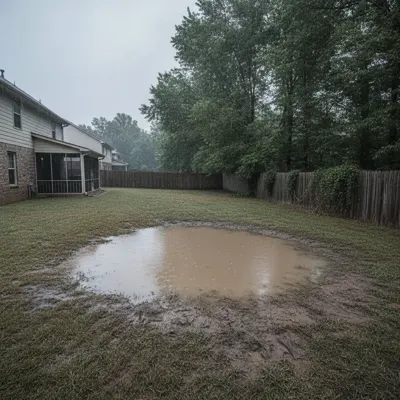
If mulch floats out of a bed after every hard rain, more mulch will not fix it. That is a water path problem: a downspout dumping into the bed, a slope sending runoff across it, or a low spot that pools. Lawn Busterz offers drainage work, including French drains, catch basins, and downspout extensions, plus skid steer grading. Fixing the water first saves you from buying the same mulch twice. See our guide on standing water in the yard for how to tell which fix fits.
Central Kentucky bed notes
Heavy clay is common in the region, and many beds sit right against foundations where roof water lands. Keep mulch a few inches below siding and weep holes, and keep it from building up against the house. Beds on slopes may do better with hardwood mulch, which tends to knit together and stay put.
Request a mulch refresh
Lawn Busterz serves Richmond, Lexington, Berea, Winchester, Nicholasville, Mount Sterling, Stanford, Danville, Lancaster, and surrounding Central Kentucky. Tell us your material preference (hardwood, dyed, or natural), roughly how many beds, and whether old mulch needs to come out. Final pricing comes after a walk-through.
Call (859) 248-0576 or email hello@lawnbusterzky.com. Hours are Mon to Sat, 7a to 7p.