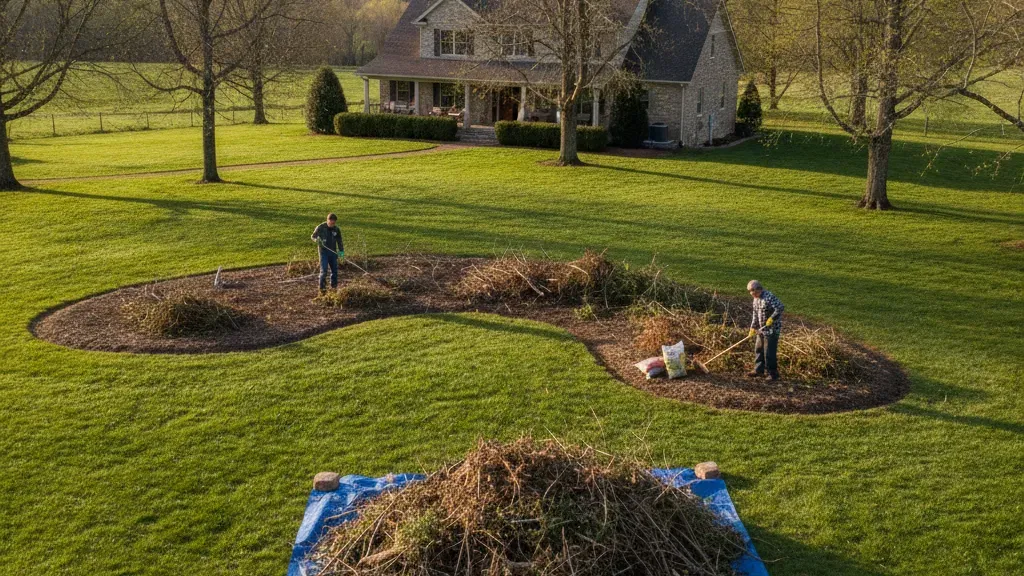
A spring or fall yard cleanup resets the property for the season: clearing leaves, sticks, and winter debris from the lawn and beds, cutting back what needs it, and hauling the material away. It is not tree removal, stump grinding, junk removal, planting design, or a fix for drainage. Spell out the scope before the visit so expectations match.
Lawn Busterz lists debris cleanup (storm cleanup, leaf removal, brush hauling) as a core service, alongside mowing, weedeating and edging, and mulching. Cleanup is often the first step before a mulch refresh or the first mow of the season. This page explains what a seasonal cleanup typically covers, what it leaves out, and how to prep so the visit goes smoothly.

Spring cleanup vs fall cleanup
The two visits do similar work at opposite ends of the growing season.
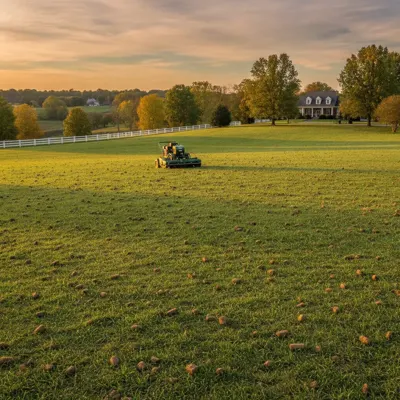
Spring cleanup (late February through April in a typical Central Kentucky year) focuses on getting the yard ready to grow:
- Clearing sticks, limbs, and debris left by winter wind and ice.
- Removing leftover leaves from the lawn, beds, corners, and fence lines.
- Clearing beds so they are ready for edging and mulch.
- Hauling the material off the property.
- Getting the lawn clear for the first mow of the season.
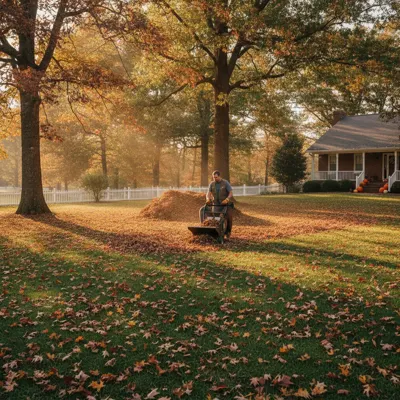
Fall cleanup (October through early December) focuses on putting the yard to bed:
- Removing fallen leaves before they mat down and smother turf.
- Clearing beds of leaves and spent debris.
- Hauling material away so it does not sit over winter.
- Leaving the lawn clean for the last mow or for winter.
Timing shifts with the weather. A warm spring can move cleanup earlier; a late leaf drop can push fall cleanup into December.
What a cleanup typically includes
When you request a cleanup, these are the items to confirm in the scope:
- Leaves. Lawn, beds, corners, fence lines, and along the house.
- Sticks and small limbs. Picked up and hauled.
- Brush piles. Loaded and hauled, if they are a size the crew can safely handle.
- Beds. Debris cleared so the soil surface and bed edge are visible.
- Hard surfaces. Driveway, walks, and patio blown clear.
- Haul-off. Material taken away. Lawn Busterz brings the trailer.
What a cleanup does not include
Being clear about exclusions is the best way to avoid a surprise. A standard seasonal cleanup does not include:
- Hazardous tree work. Leaning trees, hung limbs, or anything near power lines needs a tree professional.
- Stump grinding. It is not on the published Lawn Busterz menu. Stump removal with an excavator is a separate job.
- Junk, furniture, or construction debris. A yard cleanup is for yard material, not household items or building waste.
- Gutter cleanning. Not part of the published service list.
- Planting, design, or hardscaping. Not on the published menu.
- Fertilizing, aeration, or seeding. Not on the current published menu.
- Mulch. Fresh mulch is a separate service. Cleanup prepares the beds; the mulch refresh is quoted on its own or as an add-on.
- Fixing drainage. If debris keeps washing into the same spot, the fix is grading or drainage work, quoted separately.
If you want any of these handled at the same time, ask. Some can be bundled with other listed services; others need a different company.
Is bed edging part of cleanup or mulching?
It usually belongs with the mulch job. The Lawn Busterz mulching service is descriped as beds prepped, edged, and laid right, so edging is naturally part of a mulch refresh. A cleanup clears the bed so the edge can be seen and cut. If you want edging without new mulch, ask for it in the quote.
Cleanup before a mulch refresh
Cleanup should come first. Mulch spread over leftover leaves and debris settles unevenly, looks patchy, and can hold moisture against plants. In spring, cleanup followed by edging and mulch is a common order. In fall, mulch goes down after the leaf drop and cleanup, not instead of them.
Seasonal cleanup vs storm debris
A seasonal cleanup is a planned visit. Storm debris after high wind or ice is reactive, and the material is different: larger limbs, broken branches, and brush scattered across the yard. Lawn Busterz handles both under debris cleanup, but they are quoted differently because storm work can involve heavier material and more cutting and loading.
If a tree is leaning, a limb is hung up, or lines are down, keep clear and call a tree service or the utility first. A yard crew can handle the debris once the hazard is removed.
Central Kentucky timing notes
Clay soils across the region stay soft in late winter and early spring. Driving equipment or a loaded trailer across a saturated lawn can leave ruts that last all season. If the ground is soft, a crew may need to stage material on hard surfaces, wait a few dry days, or carry debris by hand to the trailer. Tell us about soft spots when you book.
How to prep for the crew
- Access. Unlock gates and note where the trailer can park,
- Staging. Show where brush can be piled before loading, ideally on a driveway or firm ground.
- Hazards. Flag sprinkler heads, low lights, invisible fence wire, and drain grates.
- Pets and items. Keep pets inside and move toys, hoses, and furniture.
- Special requests. Note any beds to skip or plants that need gentle handling.
Schedule a seasonal cleanup
Lawn Busterz serves Richmond, Lexington, Berea, Winchester, Nicholasville, Mount Sterling, Stanford, Danville, Lancaster, and surrounding Central Kentucky. Final pricing comes after a walk-through.
Call (859) 248-0576 or email hello@lawnbusterzky.com">hello@lawnbusterzky.com. Hours are Mon to Sat, 7a to 7p.