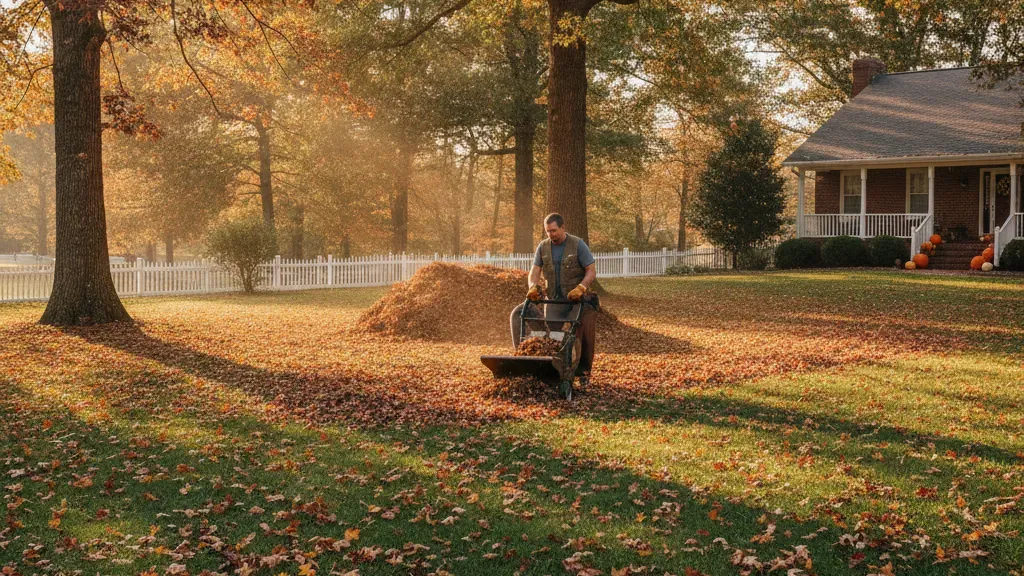
You have three ways to deal with fall leaves: mulch them into the lawn, bag them, or haul them off. Mulching works when the layer is light enough that grass still shows after a pass. Once leaves form a thick, wet mat, they smother turf, and bagging or hauling is the better choice. Beds usually need leaves out entirely before new mulch.
Lawn Busterz lists debris cleanup, including leaf removal and brush hauling, as one of its core services, and we bring the trailer. This page breaks down the three options so you can pick the one that fits your yard and know what to ask for when you request a quote.
Option 1: Mulch leaves into the lawn
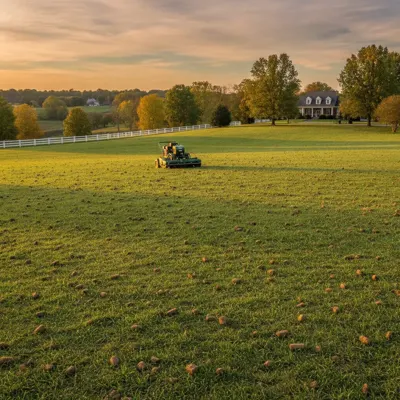
Mulching means running a mower over the leaves until they are chopped into small pieces that fall between the grass blades and break down over the winter.
When it works:
- The leaf layer is light to moderate.
- After one or two passes, you can clearly see grass through the shredded leaves.
- The leaves are reasonably dry.
Why people like it: It is fast, it keeps organic matter on the property, and in modest amounts the shredded leaves break down into the soil.
When it fails: Heavy oak and maple drops, wet leaves, or several weeks of buildup. Chopped leaves can still form a dense layer that blocks light and holds moisture against the turf. On Central Kentucky clay that already stays wet, a soggy leaf mat can thin the lawn by spring.
A good rule: if the lawn looks brown or covered after mulching, there are too many leaves for this option.
Option 2: Bag the leaves
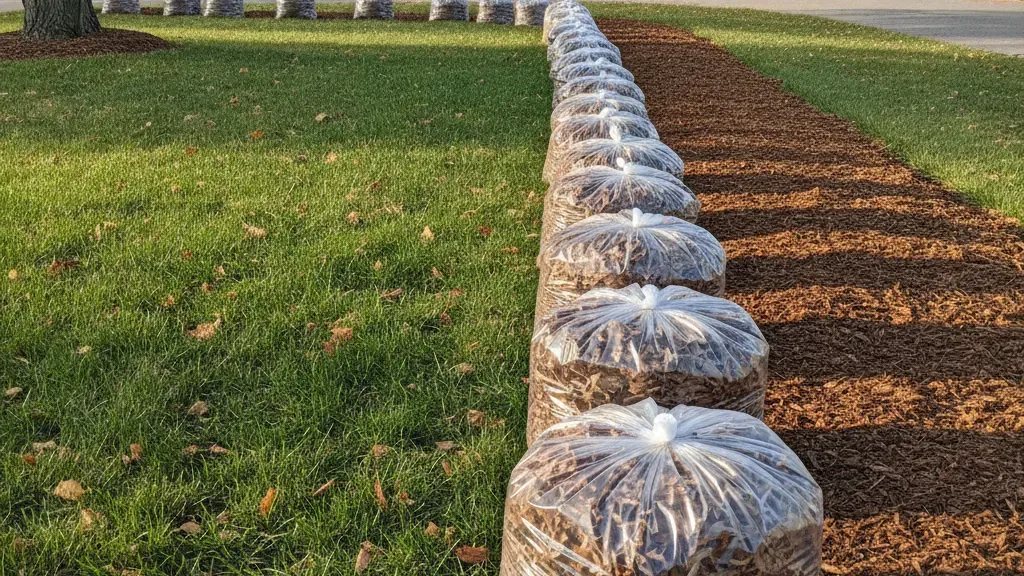
Bagging collects leaves as the mower runs, or crews rake and blow leaves into piles to bag.
When it fits:
- Heavier leaf loads that would smother the lawn.
- Homeowners who want the yard visibly clean.
- Areas where your town or service offers yard waste pickup in bags.
Trade-offs: Bagging takes longer than mulching and produces a lot of bags. Where those bags go depends on local yard waste rules, which vary by city and county in Central Kentucky. Check your local collection rules before you plan a big bagging job.
Option 3: Haul the leaves off
Hauling means the leaves are gathered and taken off the property, usually in a trailer, so nothing is left at the curb.
When it fits:
- Large lots or tree-heavy properties where bagging would be impractical.
- Properties without curbside leaf collection.
- Cleanups that also include sticks, limbs, and brush.
- When you want the job done in one visit with nothing left behind.
What it includes: The scope usually covers lawn areas and, if requested, beds, fence lines, and hard surfaces. Ask whether beds and corners are in the quote, because those spots hold the deepest drifts.
Blowing to the curb vs hauling
Some homeowners ask for leaves blown to the curb for municipal pickup. That can work where your city runs a vacuum or loose-leaf pickup program, but rules differ by town and season, and piles left in the street can wash into storm drains in a heavy rain. Hauling removes that uncertainty. If curb pickup is your plan, confirm your town's rules first, then ask your crew what they can do.
Leaves in beds before new mulch
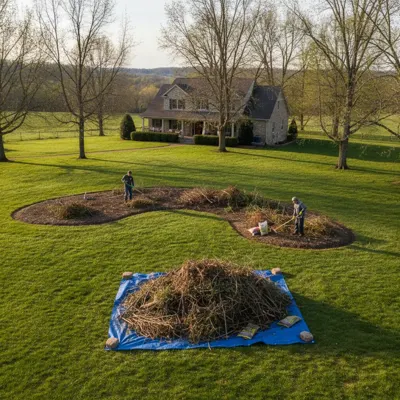
Leves left in landscape beds over winter can mat down, hold moisture against plant crowns, and hide weeds. If you plan a fall or spring mulch refresh, the leaves should come out of the beds first. New mulch on top of a wet leaf layer settles unevenly and can look patchy within weeks.
One-time leaf haul vs the last mow of the year
The last mow of the season can handle a light final leaf drop. It is not the same as a leaf cleanup. If the lawn is buried, a single cleanup visit to clear the lawn, beds, and corners before winter is usually the cleaner finish. In Central Kentucky, many trees drop in waves from October into late November, so some properties need two visits instead of one.
How to prep before the crew arrives
- Flag hazards. Low sprinkler heads, landscape lights, and shallow drainage grates.
- Move items. Hoses, toys, decorations, and furniture off the lawn.
- Open gates. Unlock gates the crew needs to reach backyards.
- Note pets. Keep pets inside during the visit.
- Point out piles. Tell the crew if any existing piles of brush or limbs should be hauled too.
Leaves, brush, and storm debris
A fall leaf cleanup is a scheduled job. Storm debris after wind or ice is a different kind of visit, with limbs and brush that may need cutting and loading. Lawn Busterz covers both under debris cleanup, but tell us which you need so the right equipment and time get scheduled. Hazardous or leaning trees, downed lines, and junk removal are outside a leaf cleanup.
Request a leaf cleanup
Lawn Busterz serves Richmond, Lexington, Berea, Winchester, Nicholasville, Mount Sterling, Stanford, Danville, Lancaster, and surrounding Central Kentucky. Tell us which outcome you want (mulched, bagged, or hauled), which areas to include, and how many trees are on the lot, and we will confirm on the walk-through what fits your property and how it is quoted.
Call (859) 248-0576 or email hello@lawnbusterzky.com">hello@lawnbusterzky.com. Hours are Mon to Sat, 7a to 7p.