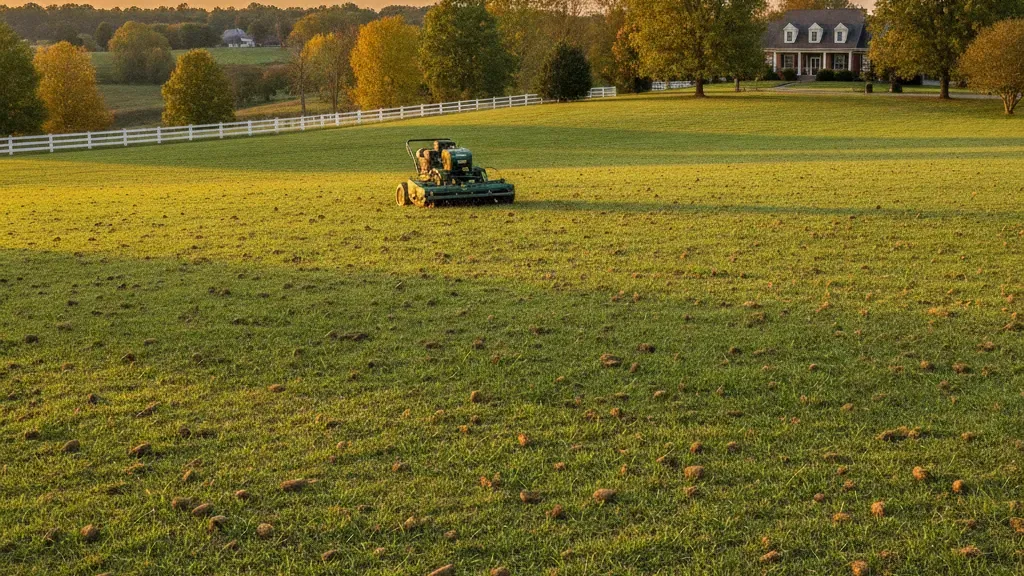
For most Central Kentucky lawns, the best time to core aerate and overseed is late summer into early fall, roughly mid-August through September, once the worst heat breaks but while the soil is still warm. Tall fescue and Kentucky bluegrass are cool-season grasses, and new seedlings need several weeks of mild weather to root before the first hard freeze.
That is the short answer. The rest of this guide explains why fall beats spring here, how to prep the lawn, why a plug aerator is different from a spike, how aeration interacts with weed control, and when a thin or soggy lawn is really a grading or drainage problem instead of a seed problem.
One note before you plan: aeration and overseeding are not on the current published Lawn Busterz service menu. This page is educational. If you want the work done, confirm the service before you book, and ask about the related work that is on the menu, such as mowing, cleanup, grading, and drainage.
Why fall is the main window in Central Kentucky
Central Kentucky sits in the transition zone, and most lawns from Richmond and Berea to Lexington, Winchester, Nicholasville, Danville, and the surrounding area are tall fescue, sometimes mixed with Kentucky bluegrass. Those grasses grow hardest in the cool parts of the year and slow down or go semi-dormant in July and August heat.
Seeding in late summer to early fall lines up with that cycle:
- Warm soil, cooler air. Seed germinates faster in warm soil, and seedlings are less stressed when daytime highs drop.
- Less weed competition. Summer annual weeds such as crabgrass are finishing their life cycle, so new grass is not fighting them for light and water.
- A long runway. Seedlings that come up in September get fall and early spring to root before the next summer.
Exact timing shifts year to year with heat and rainfall. A dry, hot early September can push the window later; an early cold snap can shorten it. Treat mid-August through September as the typical range, not a guaranteed date.
Can you aerate and overseed in spring instead?
You can, but spring seeding in Central Kentucky is a weaker bet. Seedlings that come up in April and May have only a few weeks before summer heat, and they have to compete with crabgrass that germinates in the same window. Spring is also when many homeowners put down a crabgrass pre-emergent, and most pre-emergents also stop grass seed from establishing. If you want to seed in spring, the weed-control plan has to be built around it, and you should read the product label before anything goes down.
How clay soil changes the job
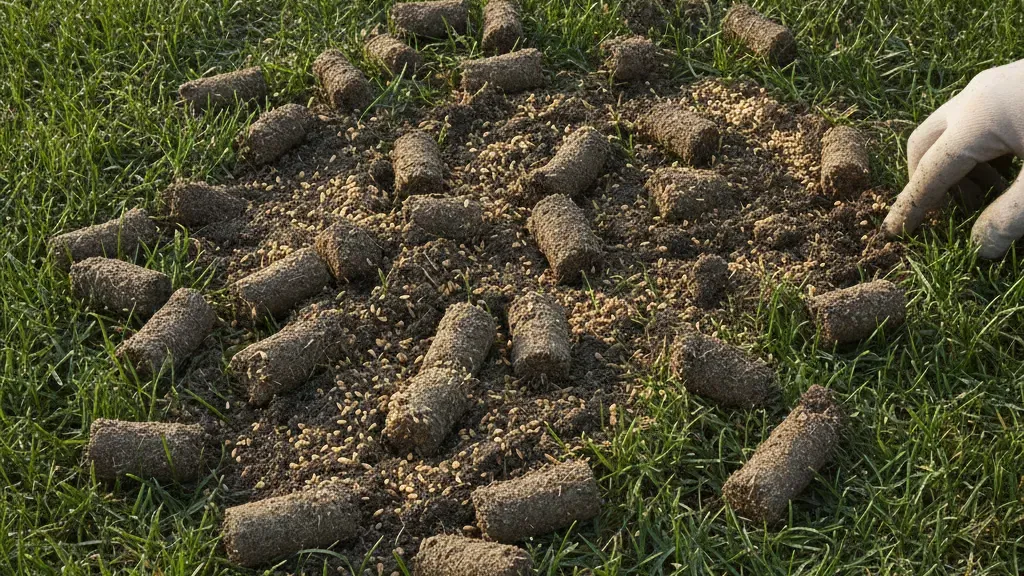
Much of Central Kentucky has heavy, clay-rich soil. Clay holds water, packs down under foot traffic and mowers, and can leave roots shallow and thin. That is exactly why core aeration helps: it pulls plugs of soil out of the ground, which opens space for air, water, and new roots and gives seed a better place to land.
Clay also makes timing matter. Aerating bone-dry clay can barely pull plugs, and aerating saturated clay can smear the holes and rut the lawn. The ideal is soil that is moist but not soggy, often a day or two after a soaking rain or a deep watering.
Plug aeration vs spike aeration
A core (plug) aerator uses hollow tines to remove small cylinders of soil and leaves them on the surface to break down. That actually relieves compaction.
A spike aerator pushes solid tines into the ground. It makes holes, but it also presses the soil around each hole tighter. On clay, that can add to the problem instead of fixing it.
If you are comparing quotes, ask which machine will be used and roughly how deep the cores will be pulled.
How to prep the lawn
- Mow a little shorter than usual before aeration and seeding, without scalping, so seed reaches the soil. Remove or mulch heavy clippings so they do not form a mat.
- Mark hazards. Flag sprinkler heads, shallow cable runs, invisible pet fence wire, and anything else a tine could hit.
- Water ahead if the ground is dry so the tines can pull real plugs.
- Leave the plugs. They look messy for a week or two, then crumble back in with rain and mowing.
- Keep seed moist after seeding. New seed needs consistent moisture until it is up and growing. Follow the seed bag and the weather, not a one-size schedule.
This page does not publish seed rates or fertilizer amounts. Those depend on the seed product, the soil, and how thin the lawn is. The bag label and the person doing the work should set them.
Weed control and new seed
The biggest timing mistake is mixing seeding and pre-emergent. Most pre-emergent products keep weed seeds from establishing, and they do the same thing to grass seed. If a pre-emergent went down recently, check the label for how long to wait before seeding. If you are seeding in fall, plan any fall weed control around the new grass, and confirm what was applied before the seed goes down.
Does aeration fix standing water?
Not by itself. Aeration can help water soak into compacted soil, but it does not change where water flows. If water collects in a low spot, runs off a roof onto the same patch every storm, or sits for days after rain, the fix is usually grading, a French drain, a catch basin, or a downspout extension. Seeding a spot that stays wet often fails the same way twice.
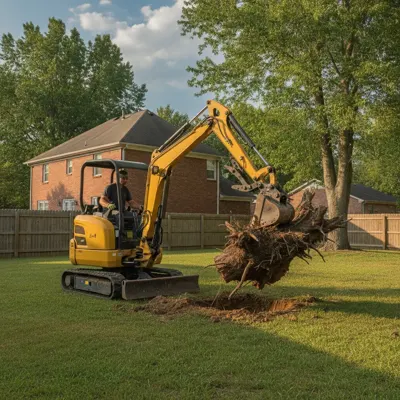
That is where Lawn Busterz can help today. Our published services include skid steer grading and leveling, excavator trenching and drainage prep, and French drains with perforated pipe, gravel, filter fabric, catch basins, and downspout extensions. Fix the water first, then plan grass.
When to call for a walk-through
If your lawn is thin in patches, rutted, or soft underfoot, a walk-through can sort out whether you are looking at compaction, a grade problem, or a water path. Lawn Busterz serves Richmond, Lexington, Berea, Winchester, Nicholasville, Mount Sterling, Stanford, Danville, Lancaster, and surrounding Central Kentucky.
Call (859) 248-0576 or email hello@lawnbusterzky.com">hello@lawnbusterzky.com. Hours are Mon to Sat, 7a to 7p. Ask about mowing, cleanup, grading, and drainage, and confirm directly whether aeration or overseeding can be added before you count on it.