Weekly mowing is usually the better fit for Central Kentucky lawns in spring and fall, when tall fescue and bluegrass grow fast. Bi-weekly can work in the slower heat of midsummer or on lawns that grow slowly. Whichever you pick, put in writing what the visit includes: mowing, trimming, edging, and blowing off hard surfaces.
Lawn Busterz offers mowing on weekly or bi-weekly schedules, with weedeating and edging listed as a separate service on our homepage. This page explains how to choose the schedule, why fewer visits do not always mean a lower bill, and how to make sure your quote matches what you expect to see when the crew pulls away.
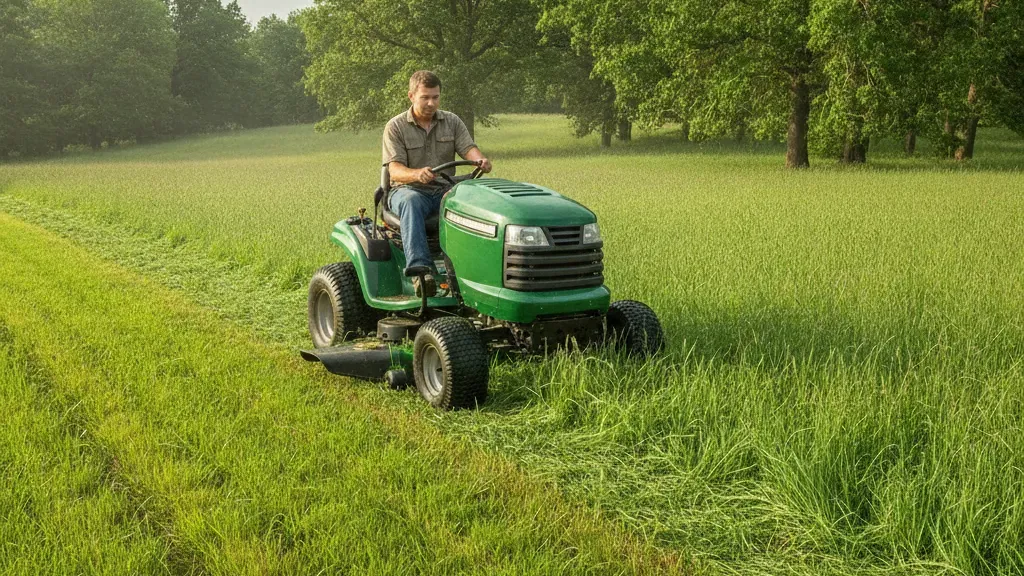
How Central Kentucky grass grows through the season
Most lawns in Richmond, Lexington, Berea, Winchester, Nicholasville, Mount Sterling, Stanford, Danville, Lancaster, and the surrounding area are cool-season turf, mostly tall fescue, sometimes mixed with Kentucky bluegrass. Their growth follows a predictable curve:
- Spring flush (roughly April through June). Growth is fastest. A lawn can gain several inches in two weeks after a warm rain.
- Summer slowdown (July and August). Heat and dry spells slow growth, and unwatered lawns may go partly dormant.
- Fall regrowth (September into November). Cooler nights and rain bring a second strong growth period, plus falling leaves.
That curve is the main reason a single schedule does not fit the whole year.
When weekly mowing is the better choice
Weekly mowing fits when:
- Grass is in the spring or fall growth flush.
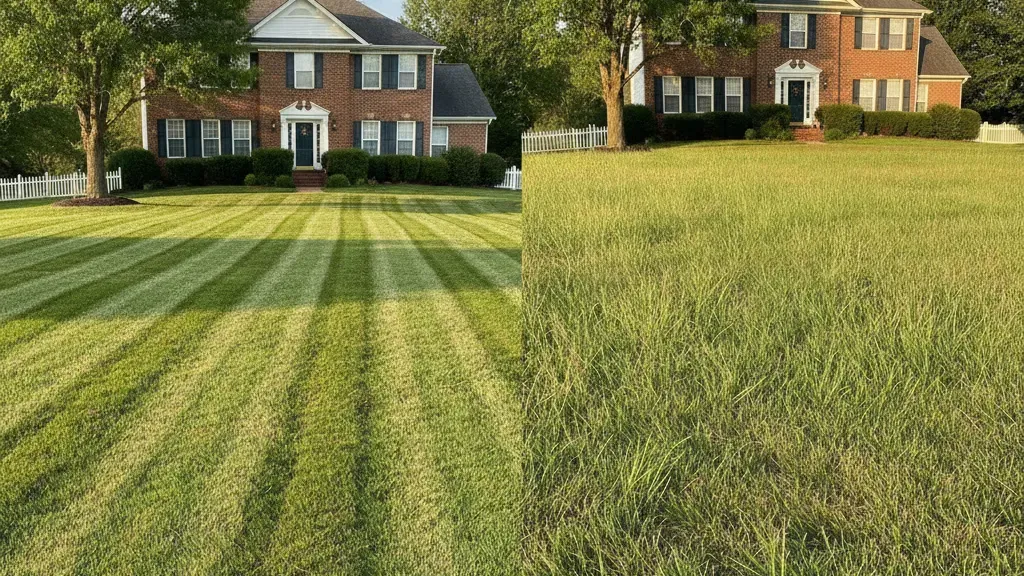
- You want a consistently clean, striped look between visits.
- The lawn is irrigated or fertilized and grows fast all season.
- Leaves are coming down and need to be mulched or cleared regularly.
The underlying rule is the one-third rule: try not to remove more than about a third of the blade in one cut. For tall fescue kept in the typical 3 to 4 inch range, that means mowing before it gets much past 4.5 to 6 inches. In a spring flush, that often takes a weekly visit.
When bi-weekly can work
Bi-weekly mowing can work when:
- Growth has slowed in midsummer heat or a dry stretch.
- The lawn is shaded or thin and simply grows slowly.
- The property is low-traffic and a slightly taller look between cuts is fine.
Many homeowners use a hybrid: weekly through the spring and fall flushes, bi-weekly through the slowest part of summer. If you want that, ask for it at the quote so the schedule change is planned, not a surprise.
Why bi-weekly can cost more per visit
Fewer visits often means a lower season total, but each bi-weekly visit can cost more than a weekly one. Two weeks of growth in spring means taller, heavier grass. The crew may need to slow down, raise the deck and double-cut, or deal with clumps of clippings that would smother the lawn if left. That takes more time and fuel per visit.
Letting grass get too tall between cuts also stresses the turf. Cutting off half the blade at once can leave it brown and thin for days, and on clay soils it can expose bare patches to weeds. In heavy spring growth, a strict bi-weekly schedule can work against the lawn.
What a mowing visit should include
The most common mowing complaint is not the cut, it is the edges. Before you sign up, settle what a visit includes. A clear scope answers:
- Mowing. All turf areas, at what height, and whether the mowing pattern changes over the season.
- String trimming. Around fences, trees, beds, mailboxes, and other obstacles the mower cannot reach.
- Edging. A crisp line along driveways, sidewalks, and bed edges. On the Lawn Busterz menu, weedeating and edging is its own service card, described as crisp lines along driveways, fences, beds, and trees. Ask whether it is bundled with your mow or priced separately.
- Blowing. Clippings cleared off driveways, walks, and patios.
- Light leaves. Whether a thin leaf cover gets mulched during the mow, and when it becomes a separate leaf cleanup.
Writing this down at the quote is the easiest way to avoid a mismatch between what you picture and what the crew is scheduled to do.
What mowing does not cover
A mowing visit is not a full yard reset. Bed weeding, mulch refresh, storm debris, brush hauling, and heavy leaf removal are separate jobs. Lawn Busterz lists mulching and debris cleanup as their own services, so they can be added or bundled, but they are not assumed in a mow.
Ruts, soft spots, and areas that stay wet after rain are not mowing problems either. A mower will keep rutting a low, soggy area. If that is happening, ask about grading or drainage instead of a different mowing schedule.
Fall mowing and leaves
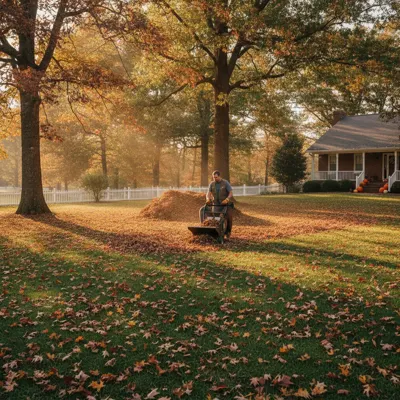
In early fall, mowing over a light layer of leaves can chop them into small pieces that settle into the lawn. Once leaves form a solid mat you cannot see grass through, mowing alone will not keep up. At that point, the conversation is a leaf cleanup: mulching heavier loads, bagging, or hauling. See our guide on leaf cleanup options for how to choose.
Getting a mowing quote
Final pricing comes after a walk-through, because lot size, slopes, obstacles, and gates all change the time per visit. Have these ready:
- Weekly, bi-weekly, or a seasonal mix.
- Whether you want trimming and edging every visit.
- Gate access and any pets in the yard.
- Areas to skip, such as new seed or wet spots.
Call (859) 248-0576 or email hello@lawnbusterzky.com. Hours are Mon to Sat, 7a to 7p. Lawn Busterz Property Maintenance, Richmond, Kentucky, serving Central Kentucky.