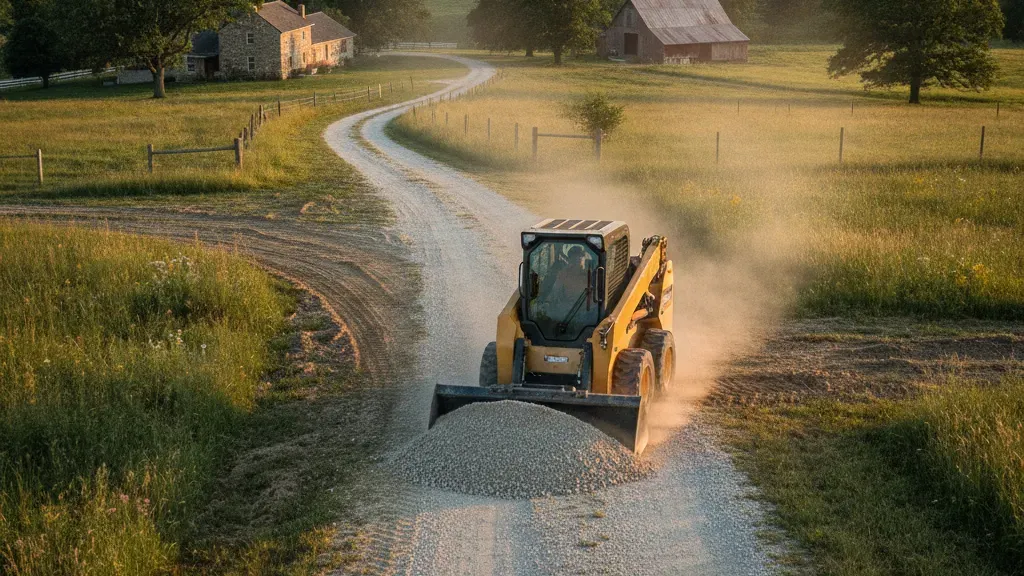
A skid steer is the right machine for most gravel driveway repairs: cutting down ruts and high spots, filling potholes and washouts, regrading the surface with a crown so water sheds off the sides, and spreading and leveling new gravel. The job lasts only if water is moved off and away from the drive.
Lawn Busterz offers skid steer work for grading, leveling, gravel, demolition, and hauling, with the operator included. This page explains what a skid steer can fix on a gravel drive, why driveways fail again, what to flag before the machine arrives, and how grading differs from drainage trenching.
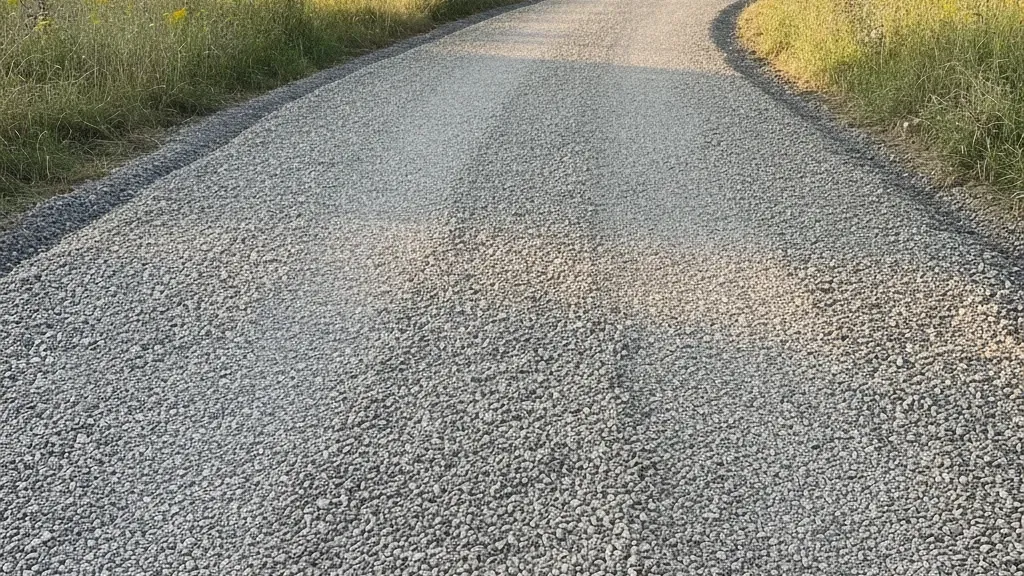
What driveway problems a skid steer fixes
Gravel driveways across Central Kentucky tend to fail in the same handful of ways:
- Ruts. Tire tracks worn into the surface, often deepened by wet weather.
- Potholes. Low spots where water sits, softens the base, and gets pounded out by traffic.
- Washboarding. Rippled ridges across the drive from traffic and loose gravel.
- Washouts. Gravel carried off by runoff, often on slopes or where water crosses the drive.
- Soft spots. Areas where the base has turned to mud.
- Lost crown. A flat or dished surface that holds water instead of shedding it.
A skid steer with the right attachment can cut down high spots, pull gravel back from the edges, fill and compact low areas, rebuild a crown, and spread fresh stone evenly. For many drives, regrading the existing material plus a top layer of new gravel is enough. For badly broken drives, the fix may include removing mud-mixed material and rebuilding the base.
Why gravel driveways fail again
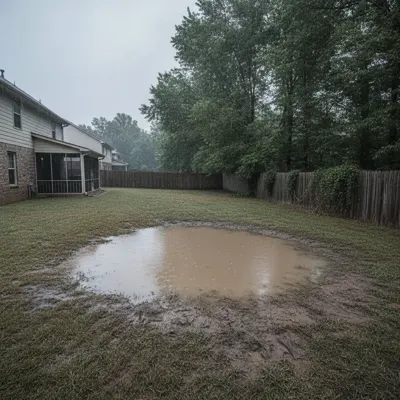
Almost every gravel driveway failure comes back to water. When rain sits on the surface or runs down the middle, it softens the base, and traffic pushes the stone into the mud. Potholes return in the same spots, and ruts reform.
The fix is shape and flow:
- Crown. A slight high point in the center, or a consistent tilt to one side, so water sheds off the surface.
- Edges. Shoulders that let water leave the drive instead of trapping it.
- Where water goes next. Water shed off the drive needs a path away, such as a graded swale or a ditch line, so it does not pond at the edge and soften the base from the side.
Central Kentucky clay makes this especially important. Clay holds water and turns soft, so a drive built on clay without good drainage will keep breaking down no matter how much gravel goes on top.
What to flag before the machine shows up
A skid steer is heavy, and grading moves soil. Before the visit:
- Utilities. Call 811 before any digging so buried lines can be marked. Point out anything you know about, such as water lines, electric runs to outbuildings, or invisible fence wire.
- Septic. If you have a septic tank or drain field anywhere near the drive, mark it. Heavy equipment should stay off septic systems.
- Gates and width. Measure gate openings and tight spots so the machine and any trailer can get in.
- Soft ground. If part of the property is saturated, say so. Equipment can rut a wet yard, and some work is better done after a dry stretch.
- Pipes under the drive. If there is an existing pipe or culvert under the driveway, point it out so it is not damaged.
Grading day vs a French drain trench
Both use machines, but they are different jobs.
Grading reshapes the surface. It moves soil and gravel to change how water runs across the ground. On a driveway, that means a crown and edges. In a yard, it can mean filling a low spot or shaping a gentle swale. Lawn Busterz does this with a skid steer.
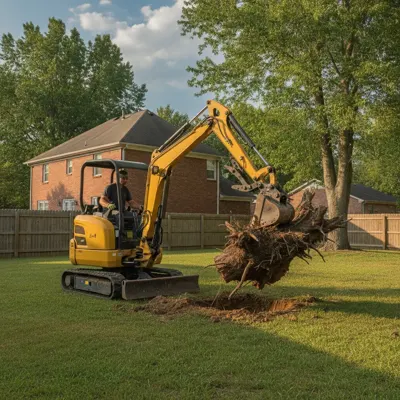
A French drain moves water underground. It is a trench lined with filter fabric, filled with gravel around a perforated pipe, that collects water and carries it to an outlet. Lawn Busterz installs French drains and uses an excavator for trenching and drainage prep.
Some properties need both. A drive might be regraded to shed water, and a French drain or catch basin added where that water collects. See our guide on standing water in the yard for how to tell which fix fits.
What is outside this job
Skid steer grading for a gravel drive does not include paving, asphalt, concrete, culvert engineering, or septic work. Those need a different contractor. If your project requires an engineered culvert or a permit for work near a road ditch, check with your local road department or county before work begins.
Other skid steer work
The same machine handles more than driveways:
- Leveling low or uneven areas of a yard before seed, sod, or a shed pad.
- Gravel spreading for parking pads, paths, or work areas.
- Demolition of small structures such as old sheds or decks.
- Hauling soil, gravel, and debris on site.
What the finished drive should do
After grading, the next good rain is the test. A well-graded gravel drive should:
- Shed water off the surface instead of pooling.
- Show no new channels running down the center.
- Hold firm under normal vehicle traffic.
- Send water to the sides and away, not back toward the house or garage.
If water still pools after a regrade, that tells you where a drainage fix is needed.
Request a driveway walk-through
Lawn Busterz serves Richmond, Lexington, Berea, Winchester, Nicholasville, Mount Sterling, Stanford, Danville, Lancaster, and surrounding Central Kentucky. Final pricing comes after a walk-through, where we look at the drive, how water moves across it, and what material is there today.
Call (859) 248-0576 or email hello@lawnbusterzky.com. Hours are Mon to Sat, 7a to 7p.